
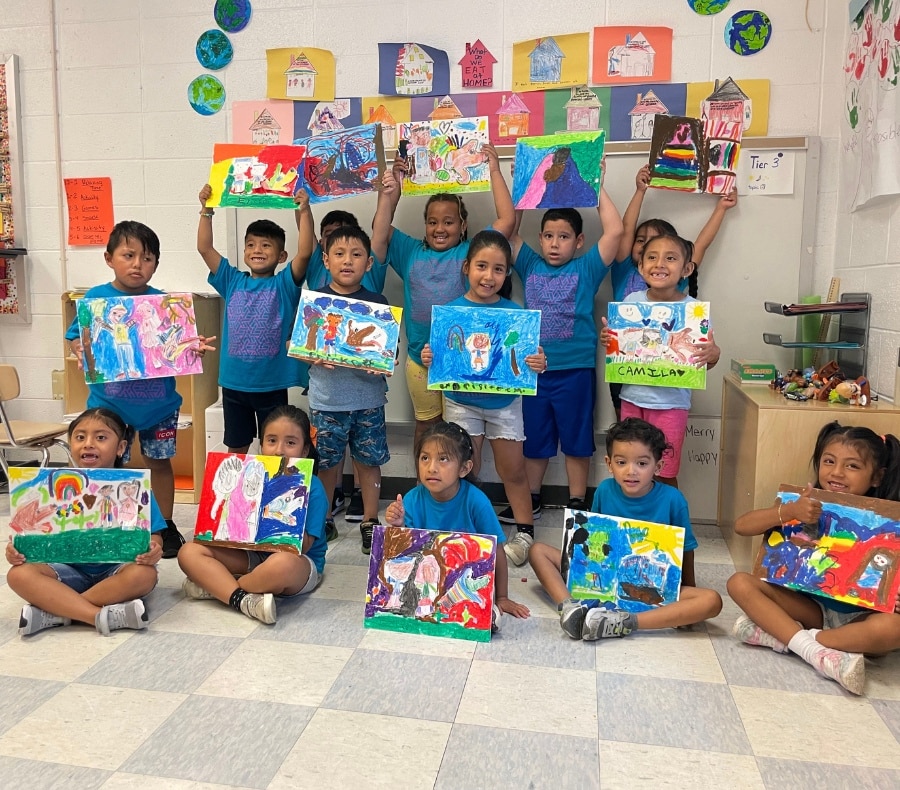
Art in classrooms as a driver of global development
The global debate on the future of education usually focuses insistently on digitalization, technology, and traditional technical skills.
However, in communities throughout Latin America and the world, a resounding demonstration is taking shape showing that the true vital lung for our youth is found in creative classrooms. Art in schools is not a curriculum accessory or a simple academic filler; it is a historical urgency and an occupational competence of the highest value.
In order for the brilliance of the creative industries not to remain solely in the applause of isolated events, global educational systems are forced to face an inescapable reality: there is a profound breakdown between traditional teaching methods and the minds that inhabit educational centers today.
In this universal scenario, global metropolises like New York emerge as the ideal reflection and laboratory for this transformation. As the global epicenter of cultural industries, the Big Apple dictates a clear lesson: arts education is not a luxury, but the indispensable fuel of its own identity and economy.
Generational breakdown
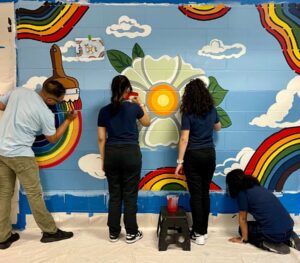 Understanding art in formal education is no longer a pedagogical luxury. While past generations built and adapted educational systems under rigid, linear, and passive memorization structures, today’s students belong to new cohorts ranging from Generation Z to Alpha.
We face the most visually stimulated generations in history. They are pure digital natives who look at life from another perspective: they do not see it in a conventional or traditional way.
For them, the boundary between the real, the digital, and the creative has disappeared.
Their natural language is co-creation, visual expression, and interactivity. Art, for these cohorts, is not a weekend hobby; it is their native tool for processing reality, decoding their surroundings, and building their identity in a hyper-connected world.
In school districts as diverse as those in New York, from the classrooms of Brooklyn to the community centers of the Bronx, this reality is palpable every day.
Young New Yorkers do not consume culture statically; they reformulate it, hybridize it, and project it, demanding an educational space that speaks their same visual and technological language.
Orange economy
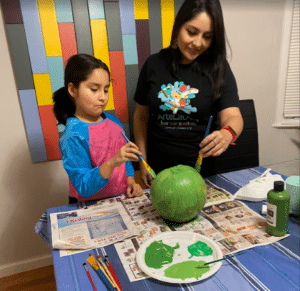 Despite the wonderful fruits that arts education harvests internationally, within traditional systems, the inertia of the past still persists.
We still find decision-makers, and even teachers, who view creative disciplines with skepticism.
A limited view prevails that only grants real value to conventional trades and industries, measuring educational success solely through standardized tests.
This institutional myopia alarmingly ignores that art is a fundamental pillar of today’s global Orange Economy.
Cultural and creative industries have consolidated themselves as one of the fastest-growing sectors in the world economy, driving youth employment, innovation, and social development.
Undermining art in schools is, in essence, turning our backs on the future of global employment and amputating the potential of tomorrow’s professionals before they even enter the market.
New York is the definitive witness to this economic impact. With sectors such as Broadway, fashion design, visual arts, and architecture generating billions of dollars annually, the city understands that a classroom without art is equivalent to economically disarming its youth in the face of the most dynamic jobs of the 21st century.
Social lifesaver
 The conflict between a rigid education from the past century and the creative minds of the 21st century is a universal challenge that resonates from major metropolises to developing communities.
Empowering educational centers focused on the arts is the most powerful social strategy nations have to offer purpose, belonging, and discipline to young people.
In complex social contexts, where vulnerable environments threaten with at-risk behaviors, art acts as a protective environment and a social lifesaver. A young person who trades the streets for an instrument, a paintbrush, dance, or design is a citizen who closes the door on vulnerability and opens a path toward productivity and critical thinking.
This formula has been successfully proven in New York’s after-school programs, demonstrating that school retention and socio-emotional well-being increase drastically when the arts are funded strategically and equitably.
Talent is abundant globally; now the great challenge is institutional. Visualizing these achievements from international platforms is an act of social responsibility. The global educational system, from its foundations to its teaching mentality, must understand that training artists is also training critical, sensitive, and productive citizens.
The goal must be for creative excellence to cease being the exception of a privileged sector or an isolated event, and to become the norm of 21st-century education.
From Artelatam, we continue to drive this global change, connecting the world’s classrooms with the future of innovation.
Post Tags :
- arte en las aulas
- Artelatam
- artes y educación
- aulas creativas
- bienestar socioemocional
- cultura y desarrollo
- dayanarareyespujols
- desarrollo global
- economía naranja
- educación artística
- educación del siglo XXI
- emprendimiento cultural
- futuro de la educación
- generación alpha
- generación z
- Gestión Cultural
- impacto social del arte
- inclusión social
- industrias creativas
- industrias culturales
- innovación educativa
- jóvenes creativos
- lenguaje visual
- nativos digitales
- nueva york educación
- pedagogía del arte
- pensamiento crítico
- políticas educativas
- retención escolar
- transformación educativa